Our Story
How a high school student's personal mission became a first-of-its-kind program transforming lives through empathy-driven engineering.
Born from Personal Experience
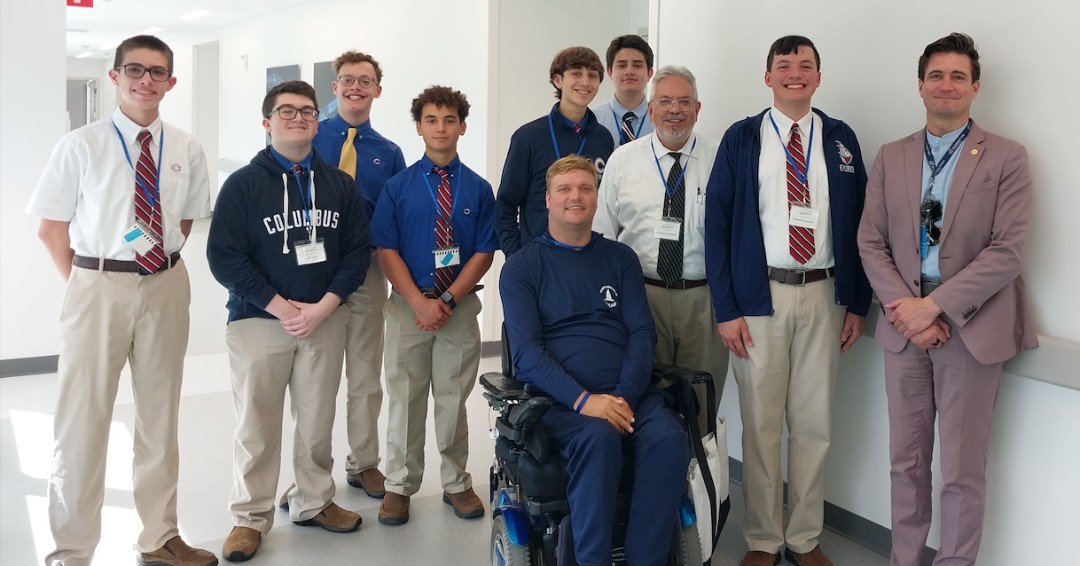
Researchers at The Miami Project to Cure Paralysis have teamed with students from Miami's Christopher Columbus High School to design and deliver assistive technology devices that transform the lives of people with physical challenges.
Columbus junior Roberto Echeverri is the organization's student founder and draws his inspiration from his family.
"My brother struggled at a young age due to developmental disabilities, especially with utensils and fine motor function. I've always loved 3D printing and computer-aided design, and I began thinking about how those skills could be applied to help solve this problem in a real, practical way."
Roberto Echeverri, Student Founder
STEM Education Meets Social Impact
Enabling Access is a student-led project that combines STEM education with social impact, empowering young innovators to create practical solutions for individuals with physical disabilities. The team of 12 students works under the supervision of Dr. David McMillan and Columbus teacher Armando Rodriguez.
"The heart of this project lies in empathy-driven engineering. We're not just teaching students how to build devices. We're immersing them in a community to understand real-world challenges and to innovate with purpose."
David McMillan, Ph.D., Research Assistant Professor of Neurological Surgery, University of Miami Miller School of Medicine & Director of Education and Outreach, The Miami Project
From Concept to Prototype
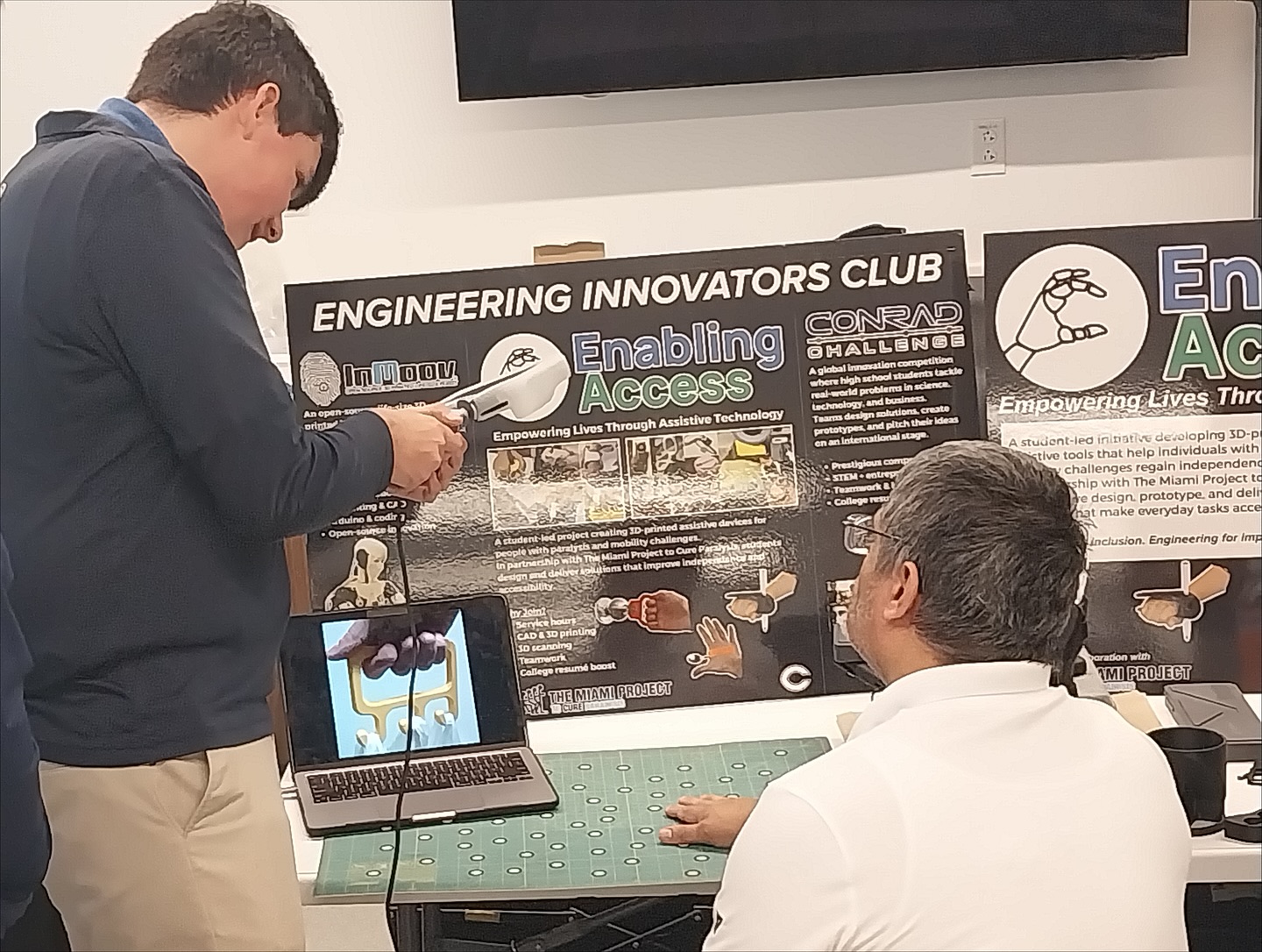
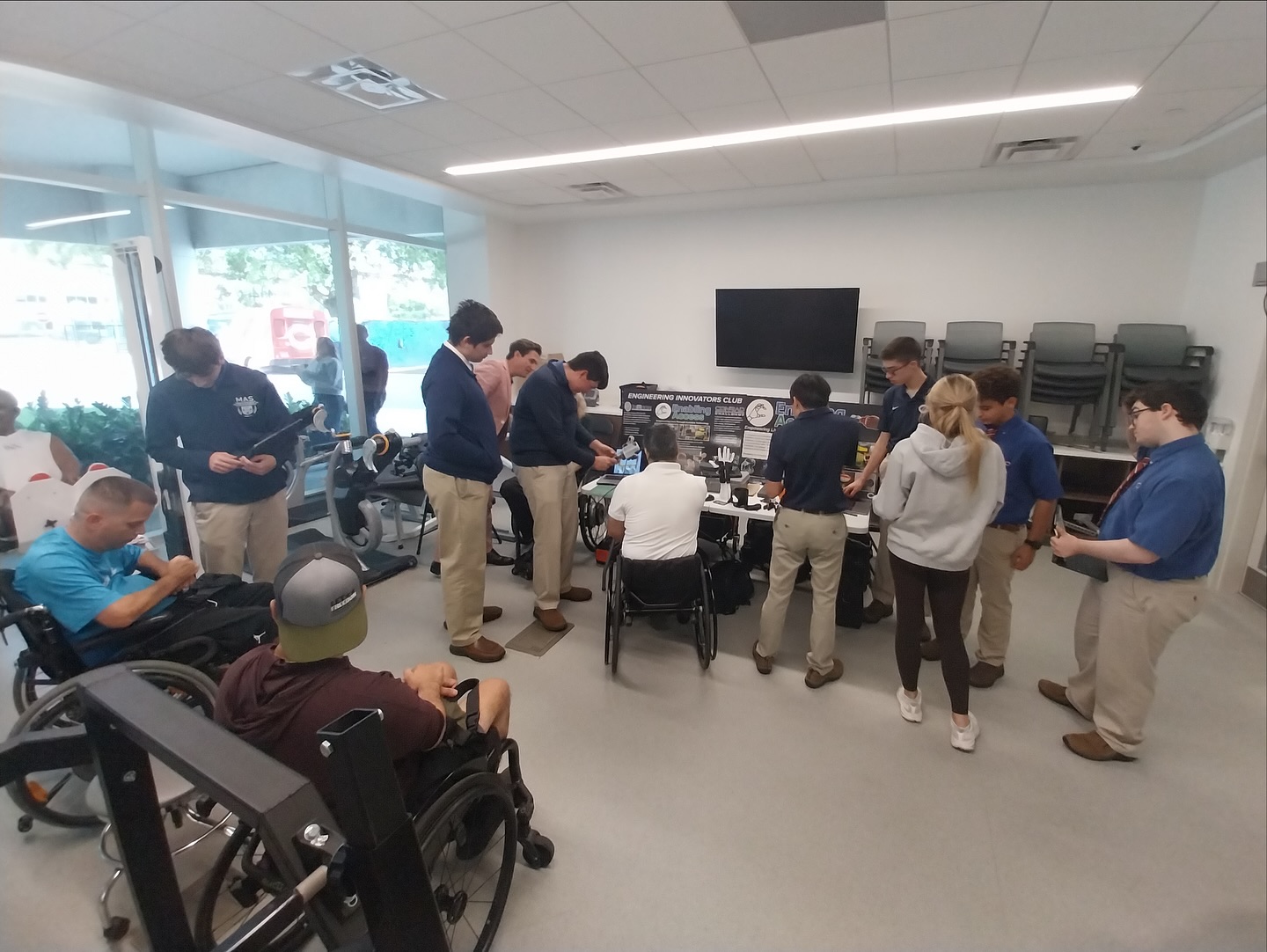
Enabling Access invites students from the school's Innovation Hub to work side-by-side with researchers from The Miami Project using a five-phase methodology.
"Every design begins with an interaction. Students meet with people who face daily mobility challenges due to paralysis, and their insights shape every decision."
Dr. David McMillan
Needs Assessment
Students conduct interviews with researchers at The Miami Project to identify gaps in existing assistive technologies. They analyze ergonomics, usability, and cost constraints to ensure solutions are practical and scalable.
CAD Modeling
Using SolidWorks and AutoCAD, teams create detailed 3D models of devices such as adaptive grips, mobility aids, and custom wheelchair mounts. Designs prioritize lightweight materials and modular components for easy customization.
Digital Fabrication
Students produce prototypes using 3D printing and CNC machining, integrating Arduino microcontrollers for devices requiring electronic functionality such as automated reachers or voice-activated switches.
Testing & Iteration
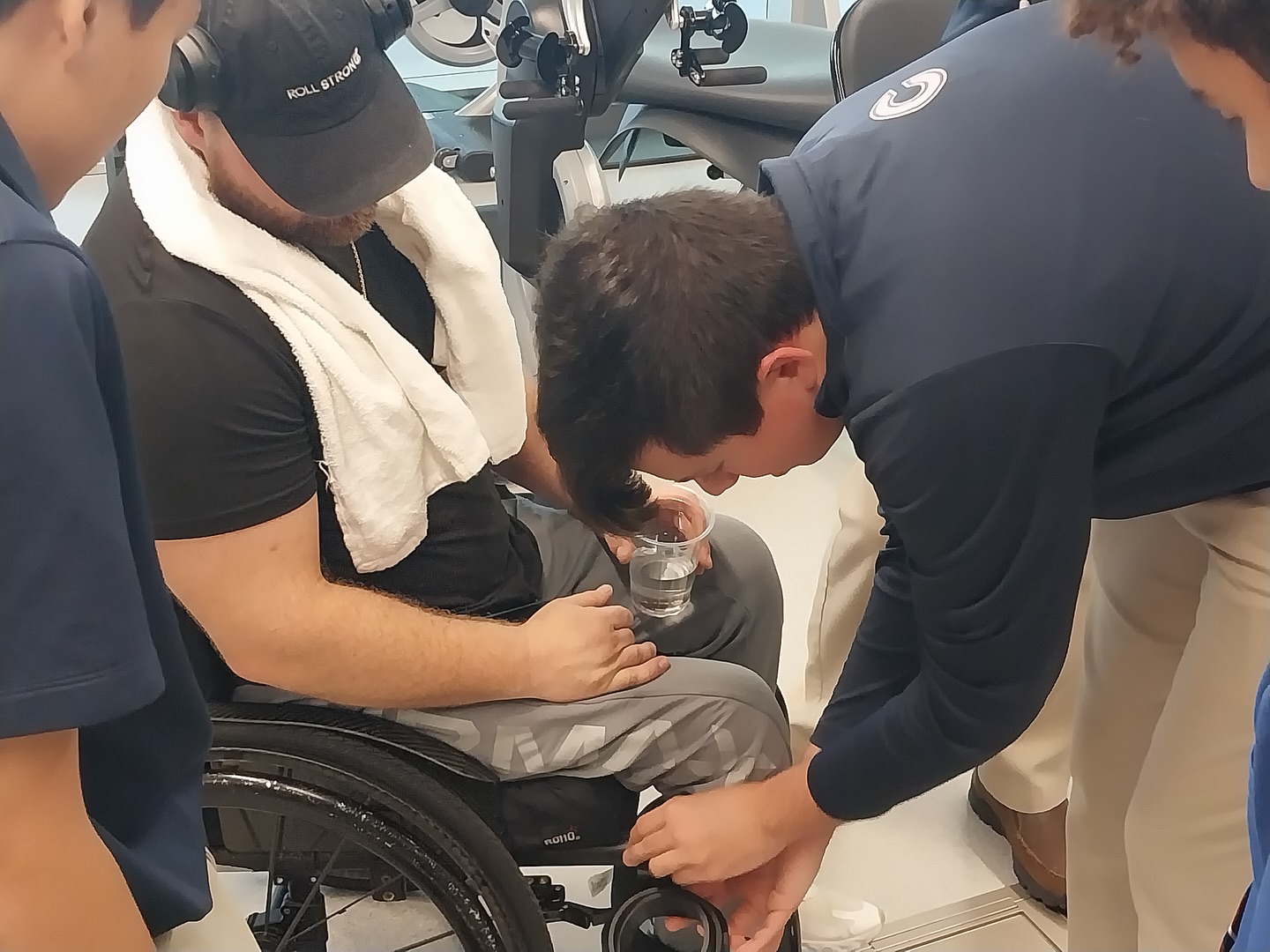
Monthly visits to The Miami Project allow students to test prototypes with end users. Feedback loops drive iterative improvements, focusing on durability, comfort, and intuitive operation.
Deployment & Training
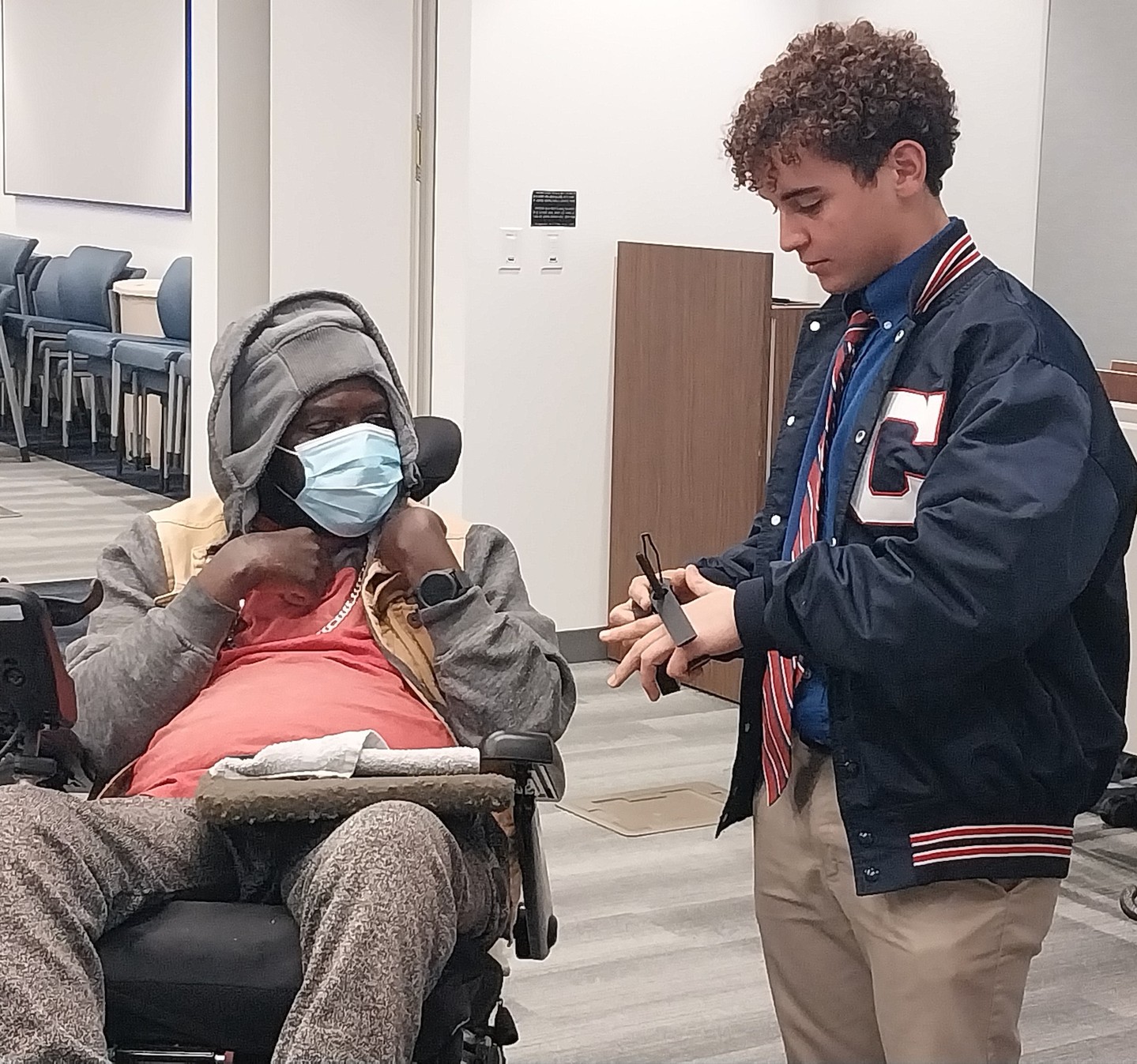
Completed devices are donated to individuals and organizations who need them, with students conducting hands-on training sessions to ensure recipients can confidently use the technology.
Community Impact & Student Growth
The project's immediate outcome is tangible: custom assistive devices that improve independence for individuals with disabilities. The students have produced products ranging from toothbrushes with special grips for people with arthritis, silverware with cuffs for people who may find holding forks and knives a challenge, key turners, and seatbelt assists.
"Our team has hands-on experience with 3D scanners, 3D printing and CAD design, which allows us to produce custom solutions efficiently. Our work is primarily focused on open-source, freely available designs, as I believe solving common, everyday challenges should be accessible to everyone."
Roberto Echeverri
Technology as a Force for Good
Roberto even created a custom software package that allows the student team to receive orders directly from The Miami Project, streamlining the entire process from request to delivery.
"Working with assistive technologies allows students to concurrently innovate and serve. When they realize that a simple design tweak can be the difference between independence and needing support, that's when technology becomes transformative."
Dr. David McMillan
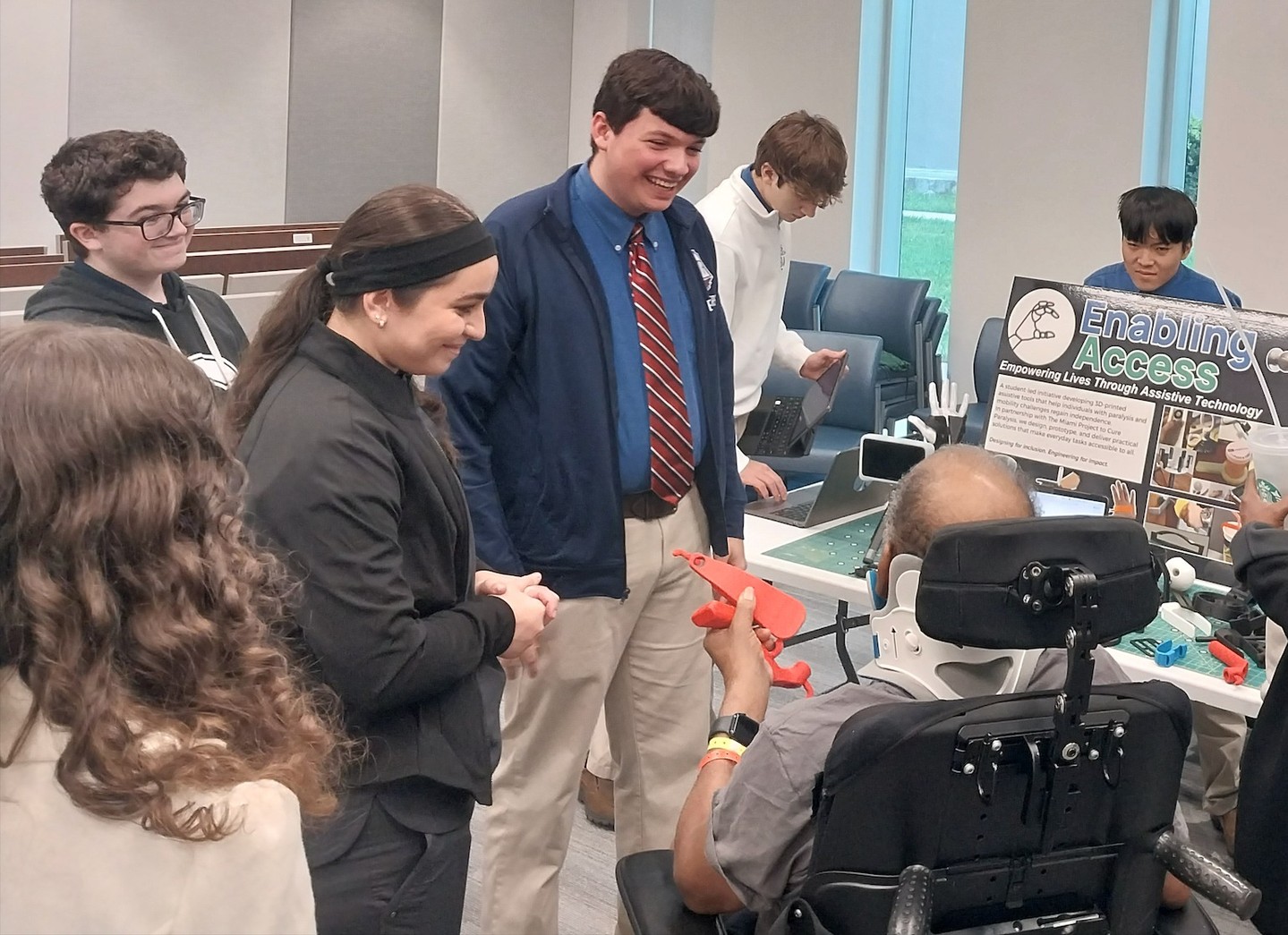
"Enabling Access has changed my life in a profound way. Working directly with patients and helping address their obstacles through 3D printing, a relatively novel manufacturing technique, has shown me how impactful accessible design can be. Meeting patients one on one, hearing their stories and understanding the challenges they face has reshaped the way I view individuals with different abilities."
Roberto Echeverri, Student Founder
A Scalable Model for the Future
The pilot phase sets the stage for expansion. Future iterations may include IoT-enabled devices, voice-controlled interfaces, and partnerships with rehabilitation centers beyond Miami. By documenting every step, the team is creating a scalable model for accessibility innovation.
"Enabling Access is not just a project. It's a model of reciprocity in innovation. It's about demonstrating that, when young minds and community needs intersect, the outcomes are more than the sum of their parts."
Dr. David McMillan
What Drives Us
Empathy-Driven Engineering
Every design begins with a human interaction. We immerse ourselves in the community to understand real-world challenges and innovate with purpose.
Open-Source Accessibility
We believe solving common, everyday challenges should be accessible to everyone. Our designs are freely available because cost should never be a barrier to independence.
Hands-On Service
We personally deliver every device and conduct training sessions to ensure recipients can confidently use the technology we create.
Student-Led Innovation
We prove that young minds can lead real innovation. From CAD modeling to CNC machining to Arduino integration, our students gain real-world engineering experience.
Be Part of the Story
Join us in building a more accessible world — one device, one patient, one connection at a time.
Get Involved